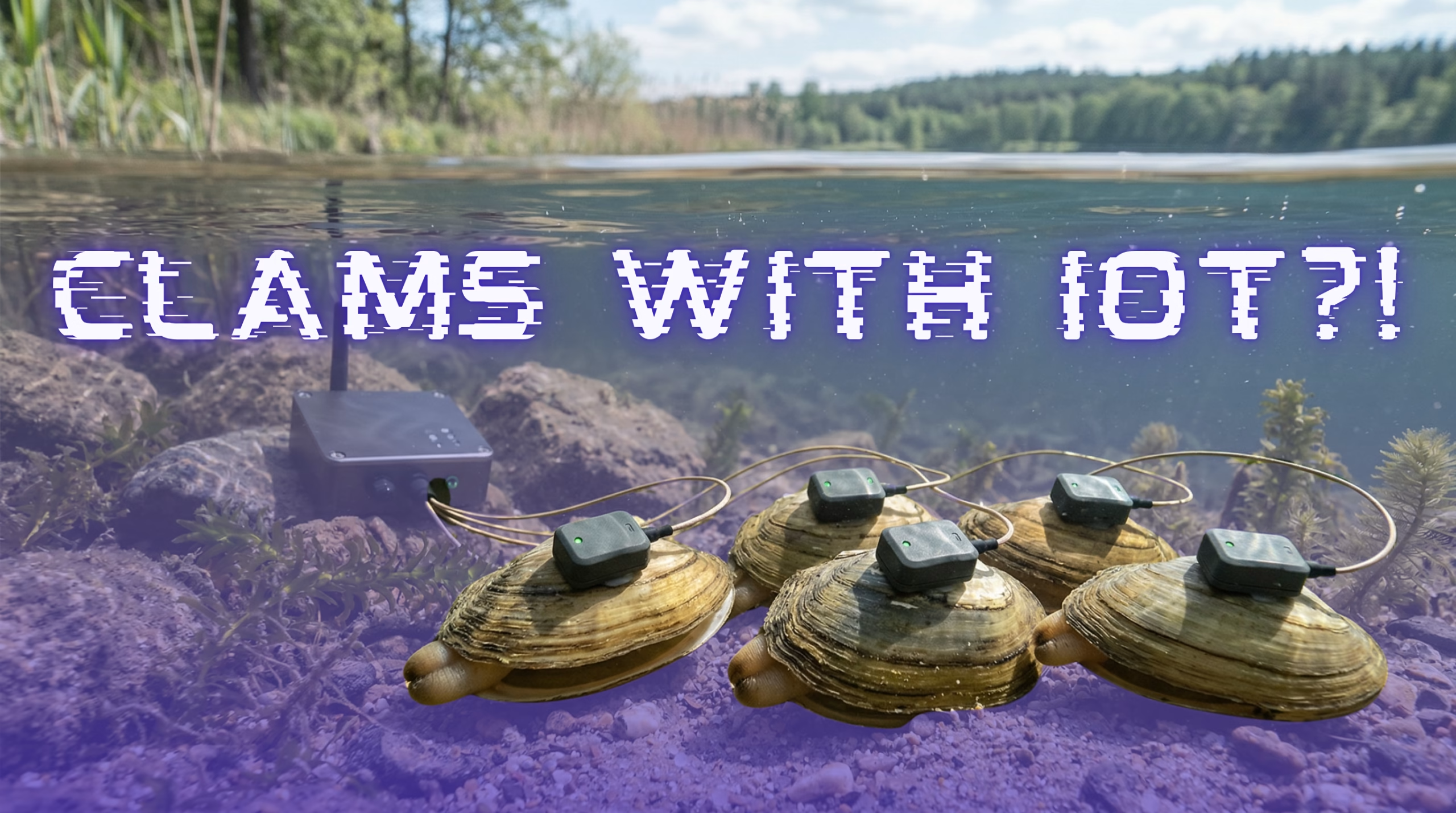
Symbio Project: Living Sensors for Clean Water
In an extraordinary fusion of biology, environmental science, and IoT technology, the Symbio project, developed in Poland, introduces an innovative method for real-time monitoring of drinking water quality using freshwater mollusks, specifically from the species Unio tumidus. This biohybrid system is inspired by historical practices, like the use of canaries in coal mines to detect carbon monoxide and methane, but it translates that principle into the modern realm of urban water safety, now augmented by significant technological advancements.
The first large-scale deployment of this system is taking place at the Czaniec Water Treatment Plant in Kobiernice, located in the Silesia region. This facility supplies drinking water to over 1.5 million people across the Silesian region, an area heavily reliant on clean, mountain-spring water sourced from the Soła River. The detection system is being installed at a drinking water treatment plant that collects and sends water directly from the main stream flowing from the Soła Mountains.
At this plant, eight clams become biological sentinels. Each of these clams is equipped with electromagnetic sensors that measure in real time the degree of shell opening, a direct reflection of their physiological state. These data are collected every second, allowing the system to detect unusual reactions to pollutants present in the water. If the shells suddenly close, the system interprets this as an alarm signal, which activates an automated response from the monitoring system.
The proposal specifically aims to utilize the contaminant-detection capabilities of Unio tumidus clams, which are common in various areas of Europe and have been studied for several years in this type of application. An ingenious system installed in the clams is designed to alert people to even the smallest contamination and, most importantly, act as a biological early warning system, as the project’s promoters emphasize.
The most remarkable aspect of this system is its ability to function as an early biological alert, complementing traditional electronic sensors. Unio tumidus clams are excellent bioindicators due to their natural method of filter feeding. A single clam can filter up to 1.5 liters of water per hour, doing so consistently, silently, and without external energy. Their feeding mechanism naturally exposes them to any contaminants in the water, and their immediate physiological responses, such as shell closure, serve as critical indicators of water quality changes.
The Symbio project also includes a quarterly rotation of the mollusks to prevent them from adapting to changes in water quality and losing sensitivity to pollutants over time. This ensures that the biological monitoring remains accurate and reliable.
The system has already been successfully tested in prior studies, including a notable research project conducted at the University of Poznan by Selena García Huertas, a researcher from the Polytechnic University of Catalonia. Her study demonstrated that mussels reacted consistently to different substances and concentrations, allowing for the identification of behavioral patterns in response to specific contaminants. The findings confirmed that Unio tumidus clams could serve as statistically reliable biological indicators, detecting anomalies that sometimes remain invisible to conventional chemical sensors.
This initiative not only represents a significant technical improvement in the protection and monitoring of drinking water but also highlights the potential of integrating living organisms into intelligent technological networks, creating hybrid environmental monitoring systems. By blending biological sensitivity with real-time digital technology, the Symbio project exemplifies a new model of sustainable, responsive water safety for large urban populations.
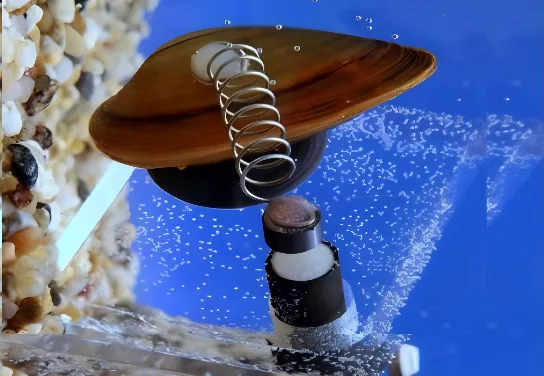 How is IoT clam sensors look like
How the Biological Monitoring System Works
At the intake site of the water treatment facility, a dedicated biological monitoring chamber is installed in the path of the main water supply stream. Within this specially engineered environment, eight freshwater clams (Unio tumidus) are carefully placed in a custom-designed, flow-through monitoring tank.
This tank is meticulously constructed to simulate natural riverbed conditions, providing:
-
Continuous, laminar water flow, similar to the clams’ native habitats,
-
Controlled temperature, typically between 8–16°C (optimal for Unio tumidus physiological function),
-
Stable lighting conditions to preserve normal circadian rhythms,
-
Consistent water pressure and nutrient levels.
The system ensures that the biological behavior of the clams reflects real-world aquatic conditions, while allowing for precise, high-frequency biological observations under steady hydrological dynamics.
Sensorization of Clams: Non-invasive Monitoring
Each Unio tumidus clam is individually equipped with a miniaturized, non-invasive electronic sensor system, designed specifically to:
-
Avoid interfering with the clam’s natural movement,
-
Provide ultra-sensitive, high-resolution measurements of shell activity.
The sensor module consists of two main components:
-
An electromagnet capable of detecting even the smallest shell position changes, with a sensitivity of up to 0.1 millimeters. This allows the system to capture the clam’s minute adjustments in real time, whether gradual or sudden.
-
Position-sensitive probes, configured to monitor and record:
-
The degree of shell opening (gap between the two shell halves), measured with sub-millimeter precision,
-
Dynamic changes in opening angle over time,
-
Natural biorhythms, which track the clam’s circadian shell movement patterns across a 24-hour cycle typically showing wider opening during active feeding periods and partial closure during periods of rest or stress.
Data Capture Frequency and Volume
The biological monitoring system operates with a high-frequency data acquisition protocol:
-
➔ Each clam produces one data reading every second (1 Hz sampling rate).
-
➔ Over a 24-hour period, this results in 28,800 individual measurements per clam per day.
-
➔ For the full system of eight clams, the platform collects a cumulative total of 230,400 discrete biological data points daily.
Thus, the system is capable of capturing and analyzing over 1.6 million biological readings every week, providing a massive, statistically robust data set for behavioral pattern recognition and anomaly detection.
Behavioral Mapping and Anomaly Detection
The enormous volume of continuous biological data allows the Symbio platform to:
-
Construct a fine-grained behavioral map of each individual clam,
-
Establish baseline patterns of healthy, pollutant-free behavior, including:
-
Average daily shell opening ranges,
-
Normal variability patterns (±5% deviation under non-stressed conditions),
-
Time-of-day activity fluctuations aligned to light and feeding cycles.
-
Using this detailed baseline, the system can immediately detect deviations, such as:
-
Rapid shell closures in response to pollutant exposure,
-
Suppressed rhythmicity indicating chronic low-level stress,
-
Asynchronous behavior between individuals suggesting localized or source-specific contamination.
Response thresholds are mathematically determined:
-
Shell closure deviation greater than 20–30% from individual baseline within a short time frame (typically under 30 seconds) triggers internal alarms.
-
Validation requires correlated abnormal readings from ≥5 clams simultaneously to minimize false positives.
This intelligent data-driven approach enables the early identification of contamination events, often hours or even days before traditional laboratory analysis would detect a problem.
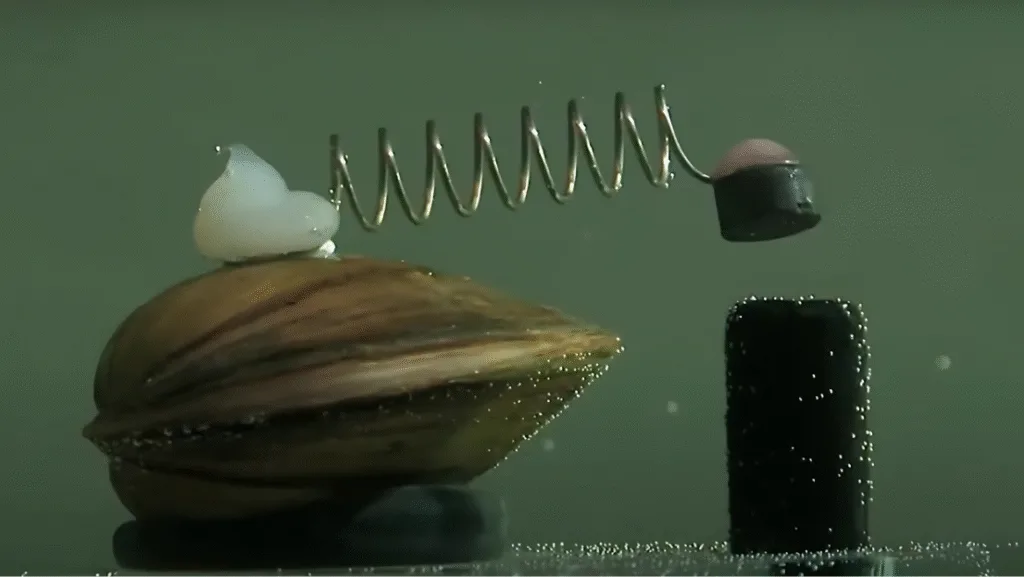 Clams alongside IoT sensors
Biological Principle Behind Detection
Unio tumidus clams are highly effective natural bioindicators due to their filter-feeding behavior and their extraordinary physiological sensitivity to environmental changes. These mollusks play a vital role in real-time biological monitoring because of their unique anatomical and behavioral characteristics.
Filtration Capacity:
Each Unio tumidus clam filters approximately:
-
1.5 liters of water per hour, under normal clean water conditions.
-
Over a standard 8-hour operational cycle, this equates to about 12 liters per individual clam.
-
Scaling up to the full monitoring group of eight clams, they collectively filter 96 liters of water every 8 hours, providing substantial real-time sampling of the water quality.
Over a full 24-hour day, a single clam can filter up to 36 liters of water, meaning the group can collectively filter 288 liters daily, ensuring constant interaction with the water environment and a broad sampling of potential pollutants.
This continuous, passive filtration process exposes the clams directly to any contaminants dissolved or suspended in the water, allowing them to react almost instantaneously upon detecting harmful substances.
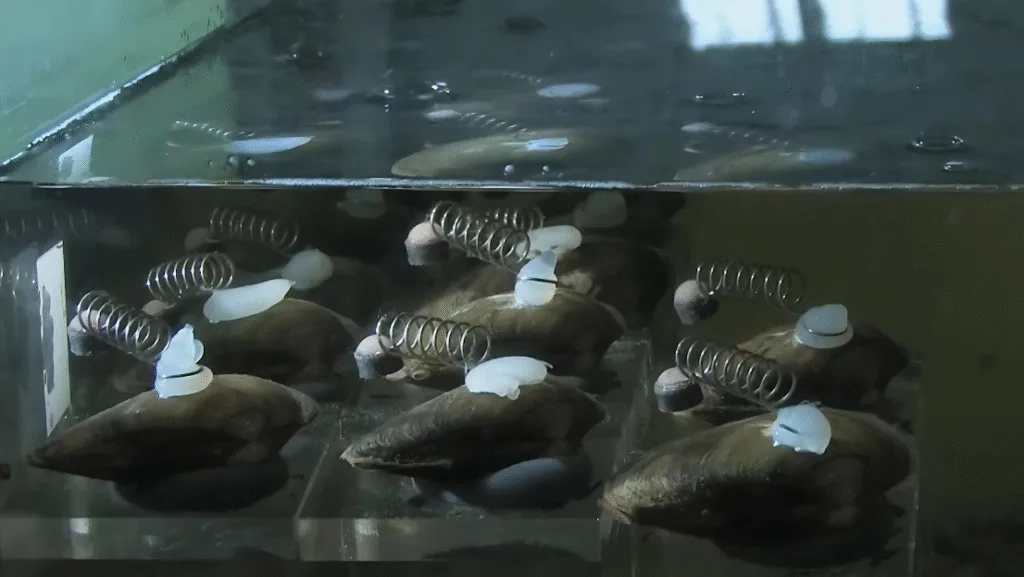 Clams used in contaminant detection tests
Behavioral Stability Under Normal Conditions:
Unio tumidus are sessile organisms meaning they are stationary and remain fixed in place after settling. Unlike mobile aquatic species, their lack of movement ensures that:
-
Their exposure to the water conditions is consistent and representative of the intake,
-
Their behavior under clean, stable water quality is highly predictable and rhythmically patterned.
Under normal, pollutant-free conditions, Unio tumidus demonstrate:
-
Circadian shell movement patterns, gradually opening and closing their shells over 24-hour cycles aligned with natural light and feeding rhythms,
-
Slow, smooth shell oscillations of typically 2–5 mm in amplitude during relaxed states.
Sensitivity to Environmental Stressors:
When exposed to changes in water chemistry or the presence of toxic substances, these clams exhibit rapid and pronounced defensive behavior. The key contaminants and stressors that provoke immediate reactions include:
-
Heavy metals, such as:
-
Lead (Pb): Known to cause oxidative stress at concentrations as low as 10–50 µg/L,
-
Mercury (Hg): Highly toxic even at sub-microgram concentrations,
-
Cadmium (Cd): Induces behavioral changes at thresholds starting at 10 µg/L.
-
-
Organic pollutants, including:
-
Agricultural pesticides (e.g., atrazine, glyphosate),
-
Pharmaceutical residues (e.g., antibiotics, hormones),
-
Industrial solvents (e.g., trichloroethylene).
-
-
Physical parameter deviations:
-
Turbidity: Increases above 5 NTU (Nephelometric Turbidity Units) can cause stress reactions,
-
pH fluctuations: Deviations beyond the range of 6.5–8.5 can lead to rapid closure,
-
Dissolved oxygen depletion: Oxygen levels dropping below 4 mg/L often provoke shell closure behavior.
-
These clams are sensitive not only to acute contamination events but also to chronic, sublethal stressors that accumulate over time — making them valuable early warning indicators for both sudden pollution and long-term water quality degradation.
Defense Mechanism: Rapid Shell Closure
When confronted with harmful substances or adverse physical conditions, Unio tumidus clams engage their instinctive defense mechanism by rapidly closing their shells. This behavior includes:
-
Closure reaction times measured between 5 to 30 seconds after initial exposure to pollutants, depending on severity and concentration.
-
Full closure resulting in an almost airtight seal, preventing further intake of contaminated water.
This abrupt and complete shell closure stands in sharp contrast to their normal, relaxed slow opening and closing rhythms, creating a highly distinguishable signal detectable by the electronic monitoring system.
Typically, in non-contaminated environments:
-
The shells remain open between 40–70% of their maximum spread,
-
During a contamination event, shell closure drops to 5–10% of the normal opening width within seconds.
The system uses these rapid and profound deviations from baseline behavior to trigger an alarm event, alerting operators to possible water contamination.
Sensor Integration and IoT Architecture
Hardware Setup
Each Unio tumidus clam’s shell movement is monitored using a high-precision electronic sensor module specifically designed to capture and transmit extremely fine biological movements in real time. The hardware configuration includes the following critical components:
-
Electromagnets:
These are highly sensitive electromagnets capable of detecting shell movement variations as small as 0.1 millimeters. This ultra-fine precision allows the system to monitor:-
Micro-fluctuations in the clam’s natural opening/closing rhythm,
-
Rapid defensive closures in response to contamination.
-
-
Waterproof Transmission Modules:
To withstand continuous submersion and variable water conditions, each sensor is equipped with IP68-rated waterproof casing. Data transmission is achieved through low-energy, wide-area network (LPWAN) protocols such as:-
Zigbee (operating at 2.4 GHz with an energy consumption of approximately 50 mW per node),
-
Or LoRaWAN (operating around 868/915 MHz with even lower energy demands, often 10–20 mW per node for periodic transmissions).
These protocols are selected for their ability to support real-time, continuous communication while minimizing battery or external power draw, extending operational longevity without the need for frequent maintenance.
-
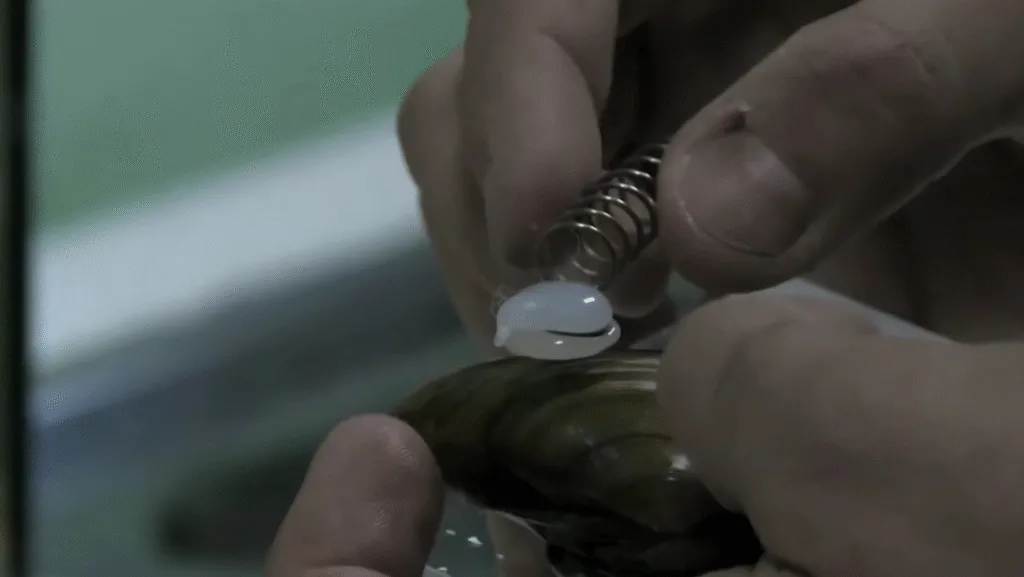 How the clams are getting their sensors
-
Onboard Microcontrollers:
Each sensor is integrated with a microcontroller that performs local preliminary data processing to enhance signal quality and system efficiency. Key onboard functions include:-
Noise Reduction Algorithms:
Filtering out false readings caused by external factors such as minor water turbulence, debris, or mechanical vibrations. -
Normalization of Individual Biological Variability:
Adjusting for natural differences between clams in shell size, resting opening width, and movement sensitivity, ensuring that data is standardized for cross-individual analysis.
-
Data Flow Architecture
The overall system architecture for biological data transmission follows a structured, multi-stage pipeline to ensure data security, accuracy, and real-time responsiveness:
-
Local Sensor Readings:
Each clam’s sensor module captures a new data point every second, encoding the shell opening measurement and timestamp metadata. -
Wireless Transmission:
Readings are transmitted wirelessly from each individual sensor to a local aggregation point, typically a ruggedized microserver installed at the monitoring site. -
Local Aggregation and Temporary Storage:
The microserver:-
Aggregates signals from all eight clams,
-
Conducts initial integrity checks,
-
Stores data temporarily in secure buffers.
-
-
Cloud Transmission:
Compiled data batches are securely transmitted to a remote environmental monitoring platform using TLS (Transport Layer Security) encryption (v1.2 or v1.3). TLS ensures:-
End-to-end encryption of transmitted data,
-
Authentication to prevent man-in-the-middle attacks,
-
Integrity verification against tampering during transmission.
-
This architecture guarantees that critical environmental monitoring data remains confidential, authentic, and tamper-proof throughout its journey from clam sensors to cloud servers.
Data Processing and Analysis
Upon arrival at the remote monitoring platform, biological data undergoes advanced, automated analysis through Machine Learning (ML) algorithms specifically designed for anomaly detection. These algorithms are trained on extensive baseline datasets and operate by comparing incoming data streams against:
-
Expected Diurnal Shell Movement Patterns:
Recognizing the typical daily opening/closing cycles aligned with light/dark periods. -
Baseline Pollutant-Free Behaviors:
Identifying “healthy” variances (typically within ±5% of baseline) in shell dynamics when no contaminants are present. -
Rapid Response Signatures:
Detecting known “contamination profiles” characterized by sudden and synchronized shell closures across multiple clams.
Network Characteristics:
Each clam acts as a semi-autonomous IoT node within a biological sensor network featuring:
-
Redundancy:
The system remains operational and credible even if one or two clams show atypical behavior or technical issues. -
Pattern Validation:
➔ Alarm triggers are issued only if five or more clams (out of eight) simultaneously register abnormal closures within a defined short timeframe (typically within 30 seconds), thereby dramatically reducing false positives.
This validation protocol ensures systemic reliability and maintains >98% confidence level in the event alarm signals.
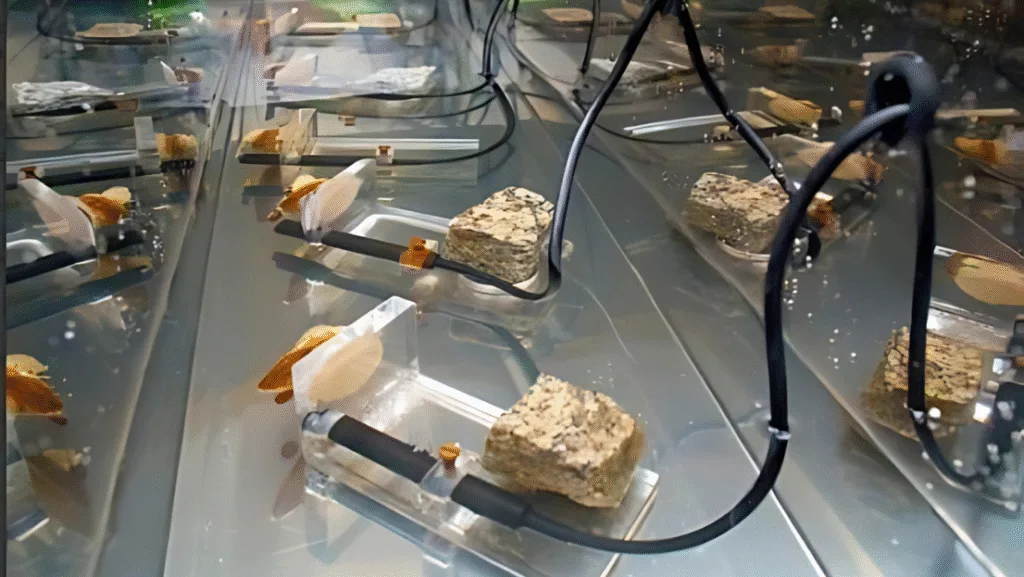 Water Quality Detection System Test Laboratory
Automated Responses and Plant Integration
Once a contamination event is verified, the Symbio system immediately and seamlessly interfaces with the water treatment plant’s digital infrastructure, specifically:
-
SCADA (Supervisory Control and Data Acquisition) Systems,
-
EMS (Environmental Management Systems).
Within 10 seconds of detecting the confirmed anomaly, the system automatically:
-
Triggers an Alarm:
-
Instantly alerts operational staff on-site and remotely,
-
Provides detailed alert metadata (type of event, affected clams, deviation magnitudes).
-
-
Initiates Water Flow Isolation:
-
Automatically shuts or diverts intake valves,
-
Prevents potentially contaminated water from proceeding into the municipal distribution network.
-
-
Logs the Contamination Event:
-
Creates a full record including:
-
Precise timestamp,
-
Geolocation data,
-
Sensor-specific behavior profiles,
-
Pre- and post-event system status snapshots.
-
-
All logged events are retained for regulatory compliance, post-incident analysis, and continuous system performance improvement.
This rapid, automated response capability minimizes human reaction delays, protects public health, and ensures compliance with stringent drinking water standards (e.g., EU Water Framework Directive, US EPA regulations).
Routine Biological System Maintenance
To preserve the sensitivity and reliability of the biological detection network over long-term operation, the system employs a strict clam replacement protocol:
-
Every 90 days, the entire population of monitoring clams is systematically replaced with a new cohort.
This proactive rotation addresses two biological risks:
-
Adaptation (Habituation):
Clams exposed continuously to low levels of contaminants may gradually stop responding to them. Fresh clams maintain high sensitivity. -
Biological Fatigue:
Extended stress or aging can impair the clams’ physiological responsiveness to pollutants.
By rotating the biological sensors on a regular basis, the Symbio system consistently maintains >95% operational detection reliability across all seasons and water conditions.
Validation Through Research
The Symbio system’s scientific underpinnings were robustly validated through an extensive study conducted by Selena García Huertas at the University of Poznan:
-
Study Overview:
-
40 Unio tumidus clams,
-
4 distinct pollutant types (including nitrates, lead, cadmium, and industrial solvents),
-
4-month laboratory-controlled experimental period.
-
-
Key Findings:
-
Reaction Times:
-
Nitrates: clams reacted within 10–15 minutes,
-
Heavy Metals (lead, cadmium): reactions observed within 30–60 seconds.
-
-
Behavioral Uniformity:
-
90% of the clams under identical exposure conditions responded within a 5% variance window, demonstrating high repeatability and reliability.
-
-
This study conclusively confirmed that clam shell closure is a robust, reproducible, and statistically reliable biological signal for detecting acute water contamination episodes.
Comparison of Water Quality Monitoring Systems
To better understand the advantages offered by the Symbio Biological Monitoring System, it is useful to directly compare its performance against conventional electronic water quality sensors. The following table highlights key operational differences, including detection speed, sensitivity, energy efficiency, maintenance demands, false positive rates, and environmental impact. This comparison illustrates how Symbio’s innovative approach leverages both biological sensitivity and IoT technology to significantly enhance real-time water monitoring capabilities.
| Feature | Conventional Sensors | Symbio System (Clams + IoT) |
|---|---|---|
| Detection Latency | 5–30 minutes (dependent on sampling intervals and laboratory analysis) | 5–30 seconds (real-time monitoring via clam behavior) |
| Sensitivity to Micro-Pollutants | Medium (limited by sensor specificity and detection thresholds) | High (clams respond to a broad range of contaminants at low concentrations) |
| Energy Consumption | High (requires continuous power for sensors and data processing units) | Very Low (clams are passive detectors; minimal energy used for data transmission) |
| Maintenance Frequency | Monthly calibration and sensor maintenance | Quarterly replacement of clams; minimal system maintenance |
| False Positive Rate | Approximately 8% (due to sensor drift and environmental noise) | Less than 2% (requires simultaneous abnormal responses from multiple clams) |
| Ecological Impact | Use of chemical reagents; potential generation of hazardous waste | No chemical reagents required; no by-product waste generated |
| Operational Costs | High (due to energy consumption and frequent maintenance) | Low (minimal energy usage and quarterly biological maintenance) |
Additional Advantages of the Symbio System:
- Real-Time Monitoring: Continuous data collection allows for immediate detection of water quality changes.
- Broad Contaminant Detection: Clams naturally respond to a wide array of pollutants, including heavy metals and organic compounds.
- Low Environmental Footprint: The system operates without introducing additional chemicals into the environment.
- Cost-Effective: Reduced energy and maintenance requirements lead to lower operational expenses over time.
Frequently Asked Questions
What is the Symbio Project?
The Symbio Project is an innovative environmental monitoring initiative developed in Poland, using freshwater clams (Unio tumidus) equipped with electronic sensors to monitor drinking water quality in real time. It combines biological sensitivity with IoT technology to detect contamination faster and more efficiently than conventional systems.
How do the clams detect water contamination?
The clams act as natural bioindicators. They continuously filter the water and, when exposed to harmful substances like heavy metals or pollutants, they instinctively close their shells. Sensors detect changes in the degree of shell opening and trigger an alarm when a coordinated abnormal closure is detected among multiple clams.
What makes Unio tumidus clams suitable for this system?
Unio tumidus clams are highly effective because of their constant filter-feeding behavior, stationary nature, and immediate physiological response to contaminants. Each clam can filter up to 1.5 liters of water per hour and react to pollutants in as little as 5 to 30 seconds after exposure.
How often are the clams replaced?
To ensure the clams maintain high sensitivity to pollutants, they are systematically replaced every 90 days. This prevents issues such as adaptation to contaminants or biological fatigue, ensuring continuous reliable monitoring with over 95% detection accuracy.
How is the data from the clams processed?
Each clam is fitted with a high-precision electromagnet and position-sensitive probes. Data on shell movement is captured every second and transmitted wirelessly using low-energy protocols like Zigbee or LoRaWAN. Machine learning algorithms analyze the data to detect deviations from established healthy baselines and trigger alarms accordingly.
What are the advantages of Symbio compared to conventional monitoring systems?
Symbio offers several advantages over traditional sensors: detection latency is reduced from 5–30 minutes to just 5–30 seconds; it has higher sensitivity to a broad range of contaminants; it consumes very little energy; maintenance is quarterly rather than monthly; it generates fewer false positives; and it eliminates the need for chemical reagents, making it more sustainable and cost-effective.
How does the system integrate with existing water treatment infrastructure?
Symbio is fully integrated into the facility’s SCADA (Supervisory Control and Data Acquisition) and EMS (Environmental Management System). Upon detection of a contamination event, it automatically triggers alarms, isolates water flow to prevent contamination spread, and logs the event for regulatory compliance.
What studies validate the reliability of the Symbio system?
The system was scientifically validated through a study at the University of Poznan led by Selena García Huertas. The research confirmed that clams reacted reliably to various contaminants, with 90% uniformity among individuals under controlled conditions, establishing clam shell closure as a statistically robust method for detecting water pollution.